My role: Service Design Lead, working within a multidisciplinary team of designers and innovation consultants, responsible for end-to-end design and validation of a new coordinated care model and supporting digital platform.
Trigger for the work: structural pressures on the traditional insurance model, including unsustainable cost growth, increasing service fragmentation, and shifting user expectations toward preventive, continuous, and digitally enabled healthcare experiences—requiring a fundamental redesign of the insurer’s role within the healthcare ecosystem.
The work focused on the design and validation of a coordinated care service model and digital platform, enabling collaboration between patients, physicians, and the insurer around preventive, continuous, and data-informed healthcare delivery. This included defining service architecture, digital journeys, and engagement models to support a shift from reactive reimbursement to proactive health coordination.
A leading private health insurer in Latin America operating within a traditionally transactional healthcare system, where insurers act primarily as intermediaries between patients and providers—authorising procedures and reimbursing costs. This model has historically contributed to fragmented care delivery, limited continuity across patient journeys, and low system-wide visibility. In response to rising healthcare costs, accelerating demand for digital services, and growing expectations for preventive and personalised care, the organisation sought to reposition itself as a proactive coordinator of health and wellbeing through a digitally enabled, integrated care ecosystem.
Healthcare delivery involved a complex ecosystem of stakeholders:
Despite a large network of providers and millions of policyholders, the system suffered from structural challenges:
Trust and data security were critical barriers.
Physicians were highly concerned about medical data privacy and the security of patient information within digital systems.
Physicians needed full visibility of patient history.
Doctors wanted integrated access to medical records, lab results, and treatment history to deliver coordinated care.
Physician workflows vary widely.
Different career stages, practice models, and levels of digital maturity required tailored engagement strategies.
Surgeons showed the strongest openness to the new model.
Specialists who depended heavily on referrals were more receptive to coordination systems.
The research identified three strategic directions to reimagine healthcare delivery around coordination, prevention, and physician-centric digital enablement.
Coordinated Care Ecosystem
Enable collaboration between physicians through shared patient visibility and structured referral pathways.
Preventive Health Management
Shift the insurer's role from reactive reimbursement to proactive health monitoring and prevention.
Physician-Centric Platform
Digital environment that integrates clinical information, lab results, and patient data in one interface.
The vision included:
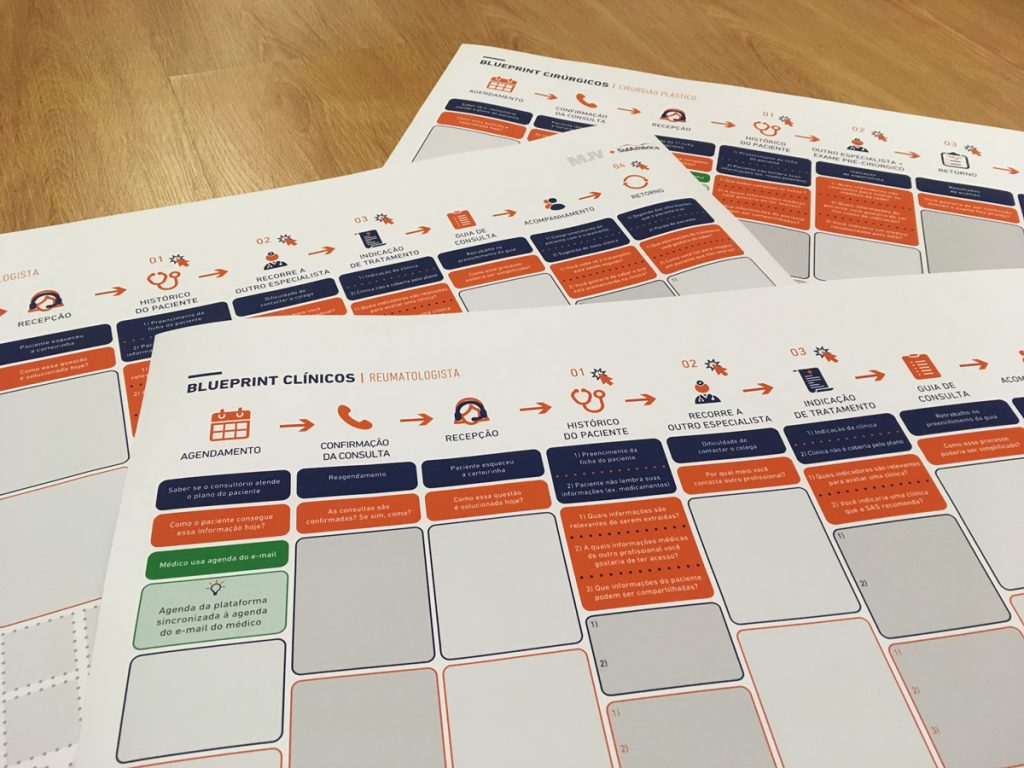
Three distinct physician service blueprints were designed to reflect different medical practice models:
Each blueprint mapped the complete healthcare experience, highlighting opportunities for coordination, digital support, and improved patient outcomes.
Helped refine both:
Insights from research and co-creation informed both:
Key outputs included: